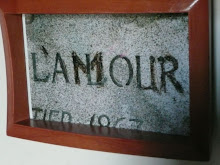
What good does it do to disapprove of someone’s wrongdoing? How does the offender gain anything – knowledge, understanding, etc. – from it? How does society benefit from our disapproval of wrongdoing? How humanity?When we disapprove of someone for a wrongdoing we are effectively setting ourselves apart from this person, disassociating ourselves from him and everything he seems to represent, ie. infidelity, dishonesty, criminality, evil, anger, etc. The consequence of setting ourselves apart from one another is, well, only that we’ve set ourselves apart from one another. It makes us less whole, less unified, and therefore, less human.
Approval is not love because love is not convenient. Convenience-in-love is borne out of ego. To choose to only love the ‘do-gooder’ over the ‘wrong-doer’ serves only ourselves. It is more convenient for us to approve of the ‘do-gooder’ because it boosts our image and gives us a sense of relief that we’re not counted among the ‘wrong-doers’. The realm of Approval (and Disapproval) is a precarious one, because contingent to Approval are conditions, terms for the relationship. And you never know where these conditions come from. Approval doesn't encourage bad behaviour. Nor does disapproval discourage it. It only classifies us (as ‘good’) and does nothing for the other.
Compassion is more than a feeling, it serves a function. This ability to feel what another feels – the torment, the isolation, the fear, the loneliness, the despondence – reminds us of our own humanity, with all its imperfections and its frailties. In this way, they help us to know ourselves more, to remember our humanity. We are equipped with Imagination for this reason among many. It’s easy to say that we aren’t able to know what’s running through a person’s mind when they do something wrong. If we were able to know the mind of evil then there must be something wrong with us, right? We might reveal ourselves to be less-than-good, right? Fear is fear. Sorrow is sorrow. Loneliness is loneliness. Doubt is doubt. The sources, the causes and the effects may vary with every situation, but the pure feelings themselves are universal.
Compassion enables us to see ourselves in them. Meanwhile, it enables them to see themselves in us, thus reminding them of 'the good' and their humanity as well, therefore. Herein lies the hope for redemption.
The more we are able to love them, the more we are able to love ourselves. The more we are able to love ourselves the more we are able to love others. The converse of this is also true: Disapproval is the absence of compassion and therefore love. The more we withhold love from others the more we withhold it from ourselves. This is because love is an energy that needs to circulate in order to sustain itself (in this world). This allows us to love them more, and loving them more enables us to love ourselves more too.
Tuesday, December 8, 2009

Friday, December 4, 2009
Ruthlessness
Who is Tiger Woods, really? We think we know. Tiger himself seemed to know too.
He’s the best golf player in the history of the game, a legend in his own time. He has dominated in the sport, leaving any competition so far behind him, making him one of the wealthiest people in the world. He found love with a wife and had children. He seemed to be living the dream and inspiring others along the way. So, how is it possible that he might not have been completely self-actualized? He seemed to be living the life he was born to live.
No one can know better than oneself whom the he was born to be. And one can be most knowledgeable in this than in any other subject under the sun. It is in merely the pursuit this knowledge that one can come to know satisfaction.
The recent event of his car crash and revelations of his infidelity to his family has clued us in to the possibility that Tiger is not satisfied. In what is becoming increasingly revealed as insatiable extra-marital activity Tiger seemed to attempt to fill an emptiness that was, in some subtle and persistent way, gnawing at, or even tormenting, him. This is what any of us would do, whether we choose drugs, sex, success, money or material goods for 'filler'. We would desperately attempt to fill the void with these things in the hope that it will anaesthetize the pain of loneliness, of loss. It's when we've giving up on ever finding ourselves that we will recklessly lose ourselves in something else. As regular, anonymous, non-billionaire folk, we could be appalled that he should take his successes for granted. That he'd be willing to gamble all of his 'earnings' so haphazardly and on petty whims. Geez, we think, couldn't he have tried a little harder to control himself?
Tiger's infidelity was an act of loathing: his ruthlessness, an expression of loathing for his lack of self-satisfaction. When we are ruthless, we are unreasonably judging, unforgiving, and critical of ourselves, first. On others, second. Ruthlessness is blind, powerful, indiscriminating. Although the loathing is directed at the self by the self, others (from family to fans) are unavoidably offended by virtue of their feeling of connection to him. Tiger's infidelity is literally a lack-of-faith, a lack of faith in the love he has with his wife. However, his lack of faith in his marriage is yet an extension of a deep-seeded lack of faith in himself. The self, as he has come to know it, has let him down. It has failed to bring him ultimate satisfaction. He may not be able to explain exactly why golf stardom hasn't done it for him, and certainly, we would be even less capable of doing so. Tiger sought these extra-marital women because he felt lonely, sure... lonely for himself.
It's impossible for talented people to be talented in only one thing. (I think Marguerite Duras once said something to that effect.) Therefore it’s possible for them to excel in any number of things and reap the rewards. But among those things, which is it that makes the person most satisfied? What gives him the greatest feelings of self-satisfaction? What is that thing that stirs his soul, makes him feel most alive? As humans, the ability to ask ourselves these questions is our divine right... to freedom. Tiger never had the chance to ask himself these questions: we cannot be satisfied if we are not free.
He’s the best golf player in the history of the game, a legend in his own time. He has dominated in the sport, leaving any competition so far behind him, making him one of the wealthiest people in the world. He found love with a wife and had children. He seemed to be living the dream and inspiring others along the way. So, how is it possible that he might not have been completely self-actualized? He seemed to be living the life he was born to live.
No one can know better than oneself whom the he was born to be. And one can be most knowledgeable in this than in any other subject under the sun. It is in merely the pursuit this knowledge that one can come to know satisfaction.
The recent event of his car crash and revelations of his infidelity to his family has clued us in to the possibility that Tiger is not satisfied. In what is becoming increasingly revealed as insatiable extra-marital activity Tiger seemed to attempt to fill an emptiness that was, in some subtle and persistent way, gnawing at, or even tormenting, him. This is what any of us would do, whether we choose drugs, sex, success, money or material goods for 'filler'. We would desperately attempt to fill the void with these things in the hope that it will anaesthetize the pain of loneliness, of loss. It's when we've giving up on ever finding ourselves that we will recklessly lose ourselves in something else. As regular, anonymous, non-billionaire folk, we could be appalled that he should take his successes for granted. That he'd be willing to gamble all of his 'earnings' so haphazardly and on petty whims. Geez, we think, couldn't he have tried a little harder to control himself?
Tiger's infidelity was an act of loathing: his ruthlessness, an expression of loathing for his lack of self-satisfaction. When we are ruthless, we are unreasonably judging, unforgiving, and critical of ourselves, first. On others, second. Ruthlessness is blind, powerful, indiscriminating. Although the loathing is directed at the self by the self, others (from family to fans) are unavoidably offended by virtue of their feeling of connection to him. Tiger's infidelity is literally a lack-of-faith, a lack of faith in the love he has with his wife. However, his lack of faith in his marriage is yet an extension of a deep-seeded lack of faith in himself. The self, as he has come to know it, has let him down. It has failed to bring him ultimate satisfaction. He may not be able to explain exactly why golf stardom hasn't done it for him, and certainly, we would be even less capable of doing so. Tiger sought these extra-marital women because he felt lonely, sure... lonely for himself.
It's impossible for talented people to be talented in only one thing. (I think Marguerite Duras once said something to that effect.) Therefore it’s possible for them to excel in any number of things and reap the rewards. But among those things, which is it that makes the person most satisfied? What gives him the greatest feelings of self-satisfaction? What is that thing that stirs his soul, makes him feel most alive? As humans, the ability to ask ourselves these questions is our divine right... to freedom. Tiger never had the chance to ask himself these questions: we cannot be satisfied if we are not free.
Friday, November 20, 2009
The Path Not Taken
We make concessions for a variety of reasons: when we don’t want to disappoint someone, when we don’t want to be seen as selfish, when we want to be ‘dutiful’, and sometimes, when we’ve given up on changing the world in either the grandest or slightest ways. It is when we’ve decided that it’s not worth it or too difficult to be contrary to the workings of the world.
I learned how easy it is to lie to yourself. How easy it is to tell yourself that “it’s worth it for the money.”
I was recently hired for a job, an opportunity I fell into unexpectedly. Lately, I had been scanning Craig’s List for some kind of light part-time work to take advantage of the holiday seasonal hiring blitz. There was a listing for a seasonal position in the menswear department of a national high-end department store. I clicked on the link to the online application and sent it in. Within the hour I received an email requesting that I schedule a phone interview with them… by clicking their link. I did so. Within an hour of the phone interview I was sent an email requesting an in-person interview to be scheduled by clicking on the attached link. The interview seemed to go better than even the interviewer had expected, because the next I knew I was being offered a full-time position selling their designer collections. It was a more prestigious position as far as retail goes, with a respectable salary and commission rate.
I guess I was flattered by the offer and agreed to meet the department manager, who was responsible for the ultimate decision. I met with her the next day. It went well and she scheduled for me an interview with the store manager the following day. I was impressed with the level of humanity in the questions, something that I hadn’t experienced in previous retail job interviews – “Would you consider yourself lucky?” My answer, by the way, was, “Yes, I do! I’m married to the love of my life and together we have a modest, yet full life, making the most of every moment.”
Upon returning home from the interview with the store manager, I found a voicemail on the phone from the department manager. I called her back and found her ‘excited’ to offer me a position on her team. I accepted. Wow, my highest paying job to date and the first job I’ve ever had that provided full BENEFITS. Benefits – it’s what everyone wants isn’t it? I was feeling pretty good about myself because of those benefits. I never really cared about them before. Somehow (by the grace of God perhaps) I had gotten by without them. But it’s a golden ring in this world and I finally have a grasp on it.
I was scheduled for 3 full days of training the following week. I was impressed by the professionalism, the enthusiasm, and the warmth of the company and everyone who represented it. This was a tight ship. I was proud to become a part of it. I felt honoured that they chose to include me in it. In a well-produced training video I watched in my class of new hires, someone said that the long-standing success of the company has been due to “the quality of people” they hire. Quality? That’s me!
Of course, in the back of my mind I knew I was being flattered and sold a pitch which I in turn was to sell to my customers. But, man, it was effective. There were moments when I felt that I, like many of the employees I had met, could give my life to this company. After all, they did seem happy and well-adjusted here. This must be the most humane retail corporation in America! They don’t employ sweatshops in third world countries, they use recyclable paper and plastic products in their cafes, and they offer benefits to their employees. Oh, yeah, and if they like me, then it's definitely a good company.
Then, during this first day of training, the store manager, by whom I’d previously been interviewed, addresses the class. She’s a very warm, unpretentious, intelligent woman. In her inspiring speech about her long, storied history with the company, how she came to “fall in love” with it, and how it has brought her to this place of success and satisfaction of her intellect and creativity, she mentioned how she had started out on a different path. She was a PR and political science major in college with aspirations to “change the world,” as she put it. She wanted to work with political parties, election campaigns and write speeches, until she discovered that this world that she wanted to change wasn’t a particularly amenable to the changes she wanted to make. She mentioned the dishonesty of politics, for example, and said, “I’m too happy” to be a part of it. So she gave up her dream of changing the world and found her way to this retailer who made her the success she is today.
I was pumped. I too could be a success at this!
On to day two of training:
I’m an attentive student. Teachers have always loved me for the way I was unwavering in my attentiveness. They have an unfailing audience in me. And I'm sure I was selling them on what a star employee I was eventually going to be. We were learning the cash registers – exciting stuff for 6 hours. After the class, each of the new hires were to go to our respective departments and ‘shadow’ one of the other salespeople.
I could go on here about how unimpressed I was with the work ethic of one of the salespeople in the department. The Teacher’s Pet/Company Man in me would have said, “This is an outrage. She’s not following the steps of selling!” I’ve done so much retail – stemming 16 years, I recently counted – that I know the drill. I know what works. But now, in retrospect, I wonder if she was just being a bit more self-honest than most of the people in that store. She was there for her paycheque, using the company as much as she felt she was being used by it. I guess she figured that if they like it, they'll buy it. She wasn't going to push. “She should give up her job to someone who would appreciate it,” we might say. “Jobs aren’t easy to come by and shouldn’t be taken for granted.”
I’m not sure I have a blanket contradiction for that. I just knew that it wasn’t for me either.
On that shift I also observed the top seller of the department. I liked him. He smiles with ease and looks you in the eye when you speak. I could see why this company hired him and why he’s so successful. He seems very genuine. And maybe he is. I can’t say.
One of his biggest customers came in. She comes in about once I week, he told me. Drops money like it's going out of style (and God forbid if she was ever caught out-of-style). Loves to talk to whoever will listen. She was clearly very attached to the salesperson – “He’s mine,” she told me. (After she left, he told me, "Aw... they cling to anyone.") He brought out an Armani coat she had purchased. She tried it on and we ooh’d and aahh’d about how marvelous it made her look. She really wasn’t particularly attractive – all her money wasn’t really serving her in the way she thought. Her clothes were clearly expensive, but verging on tacky. Each item represented the latest in trends, and were even the most knocked out versions of them. (Paige Denim jeans with the elaborate embroidered design on both rear pockets? Unnecessary. An unnecessary design feature which added value. Possibly an extra hundred dollars to the ticket price.) She spoke of a Fendi bag she had found in her closet, tags still attached. She had forgotten about it and returned it to the store. “I wasn’t even excited when I found it.”
These lonely women would be coming to me too for retail therapy, a form of therapy that is indisputably ineffective. But the way we flatter them convinces them otherwise. So they keep coming back for our acknowledgement, dropping thousands of dollars on things they don’t need, just to hear us ooh and aahh for a few minutes.
I really want to help others. This does not help. I think it causes more harm than good. It is lying to them. If I think it’s okay – after all, I’m giving them what they want - then I’m lying to myself as well.
The job also would have taken me over an hour to get to and over an hour to come back from, leaving me with only three barely-waking hours before I start the sleep-work cycle over again. The job is supposed to enhance my quality of life. If it fails to do that then it defeats the purpose and not worth the time. Besides, I live in the city for a couple of big reasons: to keep my carbon footprint low and to be close to the things of the city I enjoy.
In the end, it was the store manager’s speech which resonated with me, but in ways contrary to what she intended. It struck me that this job, this department store, is where those who have given up on ‘changing the world’ go. I didn’t want to be one of them. I still believe I can change the world.
I learned how easy it is to lie to yourself. How easy it is to tell yourself that “it’s worth it for the money.”
I was recently hired for a job, an opportunity I fell into unexpectedly. Lately, I had been scanning Craig’s List for some kind of light part-time work to take advantage of the holiday seasonal hiring blitz. There was a listing for a seasonal position in the menswear department of a national high-end department store. I clicked on the link to the online application and sent it in. Within the hour I received an email requesting that I schedule a phone interview with them… by clicking their link. I did so. Within an hour of the phone interview I was sent an email requesting an in-person interview to be scheduled by clicking on the attached link. The interview seemed to go better than even the interviewer had expected, because the next I knew I was being offered a full-time position selling their designer collections. It was a more prestigious position as far as retail goes, with a respectable salary and commission rate.
I guess I was flattered by the offer and agreed to meet the department manager, who was responsible for the ultimate decision. I met with her the next day. It went well and she scheduled for me an interview with the store manager the following day. I was impressed with the level of humanity in the questions, something that I hadn’t experienced in previous retail job interviews – “Would you consider yourself lucky?” My answer, by the way, was, “Yes, I do! I’m married to the love of my life and together we have a modest, yet full life, making the most of every moment.”
Upon returning home from the interview with the store manager, I found a voicemail on the phone from the department manager. I called her back and found her ‘excited’ to offer me a position on her team. I accepted. Wow, my highest paying job to date and the first job I’ve ever had that provided full BENEFITS. Benefits – it’s what everyone wants isn’t it? I was feeling pretty good about myself because of those benefits. I never really cared about them before. Somehow (by the grace of God perhaps) I had gotten by without them. But it’s a golden ring in this world and I finally have a grasp on it.
I was scheduled for 3 full days of training the following week. I was impressed by the professionalism, the enthusiasm, and the warmth of the company and everyone who represented it. This was a tight ship. I was proud to become a part of it. I felt honoured that they chose to include me in it. In a well-produced training video I watched in my class of new hires, someone said that the long-standing success of the company has been due to “the quality of people” they hire. Quality? That’s me!
Of course, in the back of my mind I knew I was being flattered and sold a pitch which I in turn was to sell to my customers. But, man, it was effective. There were moments when I felt that I, like many of the employees I had met, could give my life to this company. After all, they did seem happy and well-adjusted here. This must be the most humane retail corporation in America! They don’t employ sweatshops in third world countries, they use recyclable paper and plastic products in their cafes, and they offer benefits to their employees. Oh, yeah, and if they like me, then it's definitely a good company.
Then, during this first day of training, the store manager, by whom I’d previously been interviewed, addresses the class. She’s a very warm, unpretentious, intelligent woman. In her inspiring speech about her long, storied history with the company, how she came to “fall in love” with it, and how it has brought her to this place of success and satisfaction of her intellect and creativity, she mentioned how she had started out on a different path. She was a PR and political science major in college with aspirations to “change the world,” as she put it. She wanted to work with political parties, election campaigns and write speeches, until she discovered that this world that she wanted to change wasn’t a particularly amenable to the changes she wanted to make. She mentioned the dishonesty of politics, for example, and said, “I’m too happy” to be a part of it. So she gave up her dream of changing the world and found her way to this retailer who made her the success she is today.
I was pumped. I too could be a success at this!
On to day two of training:
I’m an attentive student. Teachers have always loved me for the way I was unwavering in my attentiveness. They have an unfailing audience in me. And I'm sure I was selling them on what a star employee I was eventually going to be. We were learning the cash registers – exciting stuff for 6 hours. After the class, each of the new hires were to go to our respective departments and ‘shadow’ one of the other salespeople.
I could go on here about how unimpressed I was with the work ethic of one of the salespeople in the department. The Teacher’s Pet/Company Man in me would have said, “This is an outrage. She’s not following the steps of selling!” I’ve done so much retail – stemming 16 years, I recently counted – that I know the drill. I know what works. But now, in retrospect, I wonder if she was just being a bit more self-honest than most of the people in that store. She was there for her paycheque, using the company as much as she felt she was being used by it. I guess she figured that if they like it, they'll buy it. She wasn't going to push. “She should give up her job to someone who would appreciate it,” we might say. “Jobs aren’t easy to come by and shouldn’t be taken for granted.”
I’m not sure I have a blanket contradiction for that. I just knew that it wasn’t for me either.
On that shift I also observed the top seller of the department. I liked him. He smiles with ease and looks you in the eye when you speak. I could see why this company hired him and why he’s so successful. He seems very genuine. And maybe he is. I can’t say.
One of his biggest customers came in. She comes in about once I week, he told me. Drops money like it's going out of style (and God forbid if she was ever caught out-of-style). Loves to talk to whoever will listen. She was clearly very attached to the salesperson – “He’s mine,” she told me. (After she left, he told me, "Aw... they cling to anyone.") He brought out an Armani coat she had purchased. She tried it on and we ooh’d and aahh’d about how marvelous it made her look. She really wasn’t particularly attractive – all her money wasn’t really serving her in the way she thought. Her clothes were clearly expensive, but verging on tacky. Each item represented the latest in trends, and were even the most knocked out versions of them. (Paige Denim jeans with the elaborate embroidered design on both rear pockets? Unnecessary. An unnecessary design feature which added value. Possibly an extra hundred dollars to the ticket price.) She spoke of a Fendi bag she had found in her closet, tags still attached. She had forgotten about it and returned it to the store. “I wasn’t even excited when I found it.”
These lonely women would be coming to me too for retail therapy, a form of therapy that is indisputably ineffective. But the way we flatter them convinces them otherwise. So they keep coming back for our acknowledgement, dropping thousands of dollars on things they don’t need, just to hear us ooh and aahh for a few minutes.
I really want to help others. This does not help. I think it causes more harm than good. It is lying to them. If I think it’s okay – after all, I’m giving them what they want - then I’m lying to myself as well.
The job also would have taken me over an hour to get to and over an hour to come back from, leaving me with only three barely-waking hours before I start the sleep-work cycle over again. The job is supposed to enhance my quality of life. If it fails to do that then it defeats the purpose and not worth the time. Besides, I live in the city for a couple of big reasons: to keep my carbon footprint low and to be close to the things of the city I enjoy.
In the end, it was the store manager’s speech which resonated with me, but in ways contrary to what she intended. It struck me that this job, this department store, is where those who have given up on ‘changing the world’ go. I didn’t want to be one of them. I still believe I can change the world.
Sunday, November 8, 2009
"All the world's a stage" and Agency... a Paradox?
Seeking the approval of the other is not to be confused with love of the other or the selflessness of satisfying the other. To love another you simply just have to love the other. It shouldn’t matter whether this person reciprocates the love. To seek the approval of this person is therefore the effort to satisfy one’s own ego.
When we appropriate the interests, the values, and the actions of the other, we divest ourselves of our own unique selfhood. In doing this we surrender our own agency as a uniquely thinking, feeling, and doing individual and assume those of someone else. We do this with the expectation of earning the approval of the person(s) from whom we’ve derived our sense of self: the other’s identity becomes our identity. In our sloth, our intellectual laziness, we see this as a sure and easy way to be accepted, acknowledged, liked, loved, etc. It is most definitely an easier way than loving, which is an investment that entails risk, effort, sacrifice, generosity, and possibly pain.
Therefore, seeking the approval of this other is not an act of love or even admiration. It is an act of aggression. It is aggressive because a) as explained above, there is no love involved in this modus operandi, b) you are presenting and inauthentic self to this other person, and c) when this mode fails to bring you ultimate satisfaction, you will have someone to blame for it. By surrendering your agency, you surrender responsibility for yourself and the other person.
The irony is that if this mode successfully yields satisfaction for you, you will not responsible for it. It will be a success in spite of you. However, if this mode fails to yield satisfaction to all parties involved, it will be because of you. You will be responsible for the failure. This is because each of us has our own particular role to play in this life. This is what Shakespeare has meant by his “all the world’s a stage” aphorism. We each have a part to play in humanity shared endeavour to make this world a better place, to make paradise possible for us all.
When we appropriate the interests, the values, and the actions of the other, we divest ourselves of our own unique selfhood. In doing this we surrender our own agency as a uniquely thinking, feeling, and doing individual and assume those of someone else. We do this with the expectation of earning the approval of the person(s) from whom we’ve derived our sense of self: the other’s identity becomes our identity. In our sloth, our intellectual laziness, we see this as a sure and easy way to be accepted, acknowledged, liked, loved, etc. It is most definitely an easier way than loving, which is an investment that entails risk, effort, sacrifice, generosity, and possibly pain.
Therefore, seeking the approval of this other is not an act of love or even admiration. It is an act of aggression. It is aggressive because a) as explained above, there is no love involved in this modus operandi, b) you are presenting and inauthentic self to this other person, and c) when this mode fails to bring you ultimate satisfaction, you will have someone to blame for it. By surrendering your agency, you surrender responsibility for yourself and the other person.
The irony is that if this mode successfully yields satisfaction for you, you will not responsible for it. It will be a success in spite of you. However, if this mode fails to yield satisfaction to all parties involved, it will be because of you. You will be responsible for the failure. This is because each of us has our own particular role to play in this life. This is what Shakespeare has meant by his “all the world’s a stage” aphorism. We each have a part to play in humanity shared endeavour to make this world a better place, to make paradise possible for us all.
Thursday, November 5, 2009
"Ego-love" (not to be confused with love-of-self)
When someone loves their ego, they are unable to truly love anyone else. For this person self-interest will always trump the best interests of others. This is a learned tendency. The ego has learned to feed itself in times of starvation. In other words, when this person was unable to feel the love of others – particularly very significant people in her younger years – she has learned to compensate for this lack by loving herself above others. All the energy of her love had become self-directed, and she continues to move through life in this mode.
The one’s who have gone through life loving their ego most become the most difficult for others to love. The love of ego is a very durable condition. But there is a cure, an antidote to the durable ego, and it’s to shower this person with a love like they’ve never known before, one that is endless and without conditions. To love the ego-lover in this way can be an exercise in frustration, pain, and discouragement. Therefore it requires the loving one to be as ego-free as he can possibly muster. The ego-lover is the last person we should give up on – they are the reason why love and lovers exist. It is not love if we’re doing it for what we get out of it. It is meant to be given. Also, the condition of ego-love is highly contagious and must be extinguished wherever we find it.
Restore to them their naturally divine ability to love by being an example of it. Restore their faith in love and humanity.
The one’s who have gone through life loving their ego most become the most difficult for others to love. The love of ego is a very durable condition. But there is a cure, an antidote to the durable ego, and it’s to shower this person with a love like they’ve never known before, one that is endless and without conditions. To love the ego-lover in this way can be an exercise in frustration, pain, and discouragement. Therefore it requires the loving one to be as ego-free as he can possibly muster. The ego-lover is the last person we should give up on – they are the reason why love and lovers exist. It is not love if we’re doing it for what we get out of it. It is meant to be given. Also, the condition of ego-love is highly contagious and must be extinguished wherever we find it.
Restore to them their naturally divine ability to love by being an example of it. Restore their faith in love and humanity.
Tuesday, November 3, 2009
Love and Practicality
‘Practicality’ and ‘love’ haven’t been known to keep one another company. Love is typically thought of as existing in the absence of practicality, as though love is beyond rationale, even devoid of usefulness. It has often been thought of as something to be enjoyed, a luxury, a bonus to this life. “It’s nice, if you’ve got it.” “It makes life sweeter.”
But I’m convinced that there can be no practicality without love and no love without practicality. They are necessarily codependent. One cannot exist without the other.
Let’s first look at practicality as requisite for love: love is more than a feeling. It is the sustained act of loving, however unwieldy. It is the continual practice of love, come what may. This, therefore, implies that the practicality of love – love in practice – is impossible without faith. Also, faith, by its nature, is unending. There is no such thing as ‘faith to a point’. If you have it, you have it all the way. It’s not ‘faith’ otherwise.
As for the inverse: one needs love in order to be practical, if ‘practical’ means doing what one can do in order to live. Yes, we do need love in order to survive. Anything – every little and big thing - we do must be done with the purpose of improving another’s life (whether it’s that of a husband, a child, a parent, a neighbour, a member of one’s community, or the community as a whole). If the deed is motivated by this desire, then it is motivated by love. This is authentic; it is part of authenticity of self. To do something for the purpose of only making one’s own life better is not a deed motivated by love, but rather by ego. Allegiance to the ego is not authentic. It is to worship of a ‘false idol’ (because you cannot be you without another, without the Other).
To try to persevere without love, the authenticity of self, is to exist without really living. If there is no authentic purpose, there is no meaning. Without this authenticity, we are merely the living dead - zombies. It is this ability to love which gives us our soul; it is our soul which gives us this ability. It’s not just what fills our lungs or what courses through our veins that makes us live. It’s this sense of purpose.
Destiny eventually reveals whether or not your motives were pure. It’s the ultimate litmus test of love.
But I’m convinced that there can be no practicality without love and no love without practicality. They are necessarily codependent. One cannot exist without the other.
Let’s first look at practicality as requisite for love: love is more than a feeling. It is the sustained act of loving, however unwieldy. It is the continual practice of love, come what may. This, therefore, implies that the practicality of love – love in practice – is impossible without faith. Also, faith, by its nature, is unending. There is no such thing as ‘faith to a point’. If you have it, you have it all the way. It’s not ‘faith’ otherwise.
As for the inverse: one needs love in order to be practical, if ‘practical’ means doing what one can do in order to live. Yes, we do need love in order to survive. Anything – every little and big thing - we do must be done with the purpose of improving another’s life (whether it’s that of a husband, a child, a parent, a neighbour, a member of one’s community, or the community as a whole). If the deed is motivated by this desire, then it is motivated by love. This is authentic; it is part of authenticity of self. To do something for the purpose of only making one’s own life better is not a deed motivated by love, but rather by ego. Allegiance to the ego is not authentic. It is to worship of a ‘false idol’ (because you cannot be you without another, without the Other).
To try to persevere without love, the authenticity of self, is to exist without really living. If there is no authentic purpose, there is no meaning. Without this authenticity, we are merely the living dead - zombies. It is this ability to love which gives us our soul; it is our soul which gives us this ability. It’s not just what fills our lungs or what courses through our veins that makes us live. It’s this sense of purpose.
Destiny eventually reveals whether or not your motives were pure. It’s the ultimate litmus test of love.
Saturday, October 31, 2009
A History
She never was secure in her father’s love, ever looking for his approval, even into her adulthood. Any earnings she made went to them – 90% of her wages for years. Meanwhile, she counted slices of bread and shared a one bedroom apartment with five other young pre-professional women working hard for their break into the corporate scene. The idea was that the parents were using the money to invest in her future. (It was always more about investing for the future – for a better life… in the future.)
She eventually found a man who wanted to marry her, devote his life to her. He crosses the ocean to be with her, ringing in his ears the voices of disapproval of his own family. She went for it: got married. It’s what people do.
But her father didn’t seem to welcome this new person in his daughter’s life. This new person curbed the daughter’s attention for her father. The father had his own wife, but he never fully surrendered himself to it, always hanging on the outside of his own potential life. His wife, the mother, was loving and devoted – although at times, she wasn’t sure why – but he kept her at arm’s length: the power of this love was just too much to handle, too much to reciprocate. A daughter’s devotion, on the other hand, can be modulated, manipulated.
The father expressed his disfavour for the daughter’s husband: he was of ‘low-birth’; his business wasn’t white-collar; he didn’t provide his daughter the lifestyle she was entitled to. And perhaps, on some level, he recognized in this man the same limitless devotion he saw in his own wife. It’s something to distrust and fear. It’s something one cannot rely on. Money. Material goods. They are secure. You can rely on them. They’re what will get you through life.
The daughter wasn’t strong enough to withstand her father’s blows to her life. She starts to turn on her husband, the one who left everything just to love her. She became a ruthless critic herself. Nothing he did could ever be good enough. He becomes despondent: is this where my faith led me? Is this how faith disappoints in the end? Faith, he learns, is a lie; it’s not rewarded. He turns angry. He fights back in his not-so-passive ways. The marriage, after only a few years, is obliterated. The possibility for repair is completely unforeseeable.
They have kids. It’s what people. Having beautiful children will provide the façade of peace and satisfaction. But the wife and husband are still at war. Now they have ammunition between them. Or territory to claim. I’m not sure which.
In one, ultimate blow, she seizes the territory as her own. He has very little hope of regaining it now. He had been demonized. He had failed them. So according to the wife’s rhetoric, she had every justification for taking the children away from him. ‘I saved them. Therefore, they will have to love me more.’ They were going to live with her father and mother. Her father approves of this. Finally, he can correct the bad habits formed in them by their low-class father. He will get to teach them all the things that life is about, like obedience, discipline, and academics. ‘The children’s father is about all play and no work. I will show them that virtue is in a life of all work and no play,’ the grandfather tells himself.
Almost 30 years later, the grandparents have passed on. (The grandfather had a lonely, emotion-less funeral; the grandmother had a very populated, laudatory one.) There is very little trace of the woman’s family. The bonds are tenuous. Except for the woman, each of them is in a new family of their own. She lived for her parents, her father’s approval. But now they are gone and she is left with very little else, much less a sense of herself.
She eventually found a man who wanted to marry her, devote his life to her. He crosses the ocean to be with her, ringing in his ears the voices of disapproval of his own family. She went for it: got married. It’s what people do.
But her father didn’t seem to welcome this new person in his daughter’s life. This new person curbed the daughter’s attention for her father. The father had his own wife, but he never fully surrendered himself to it, always hanging on the outside of his own potential life. His wife, the mother, was loving and devoted – although at times, she wasn’t sure why – but he kept her at arm’s length: the power of this love was just too much to handle, too much to reciprocate. A daughter’s devotion, on the other hand, can be modulated, manipulated.
The father expressed his disfavour for the daughter’s husband: he was of ‘low-birth’; his business wasn’t white-collar; he didn’t provide his daughter the lifestyle she was entitled to. And perhaps, on some level, he recognized in this man the same limitless devotion he saw in his own wife. It’s something to distrust and fear. It’s something one cannot rely on. Money. Material goods. They are secure. You can rely on them. They’re what will get you through life.
The daughter wasn’t strong enough to withstand her father’s blows to her life. She starts to turn on her husband, the one who left everything just to love her. She became a ruthless critic herself. Nothing he did could ever be good enough. He becomes despondent: is this where my faith led me? Is this how faith disappoints in the end? Faith, he learns, is a lie; it’s not rewarded. He turns angry. He fights back in his not-so-passive ways. The marriage, after only a few years, is obliterated. The possibility for repair is completely unforeseeable.
They have kids. It’s what people. Having beautiful children will provide the façade of peace and satisfaction. But the wife and husband are still at war. Now they have ammunition between them. Or territory to claim. I’m not sure which.
In one, ultimate blow, she seizes the territory as her own. He has very little hope of regaining it now. He had been demonized. He had failed them. So according to the wife’s rhetoric, she had every justification for taking the children away from him. ‘I saved them. Therefore, they will have to love me more.’ They were going to live with her father and mother. Her father approves of this. Finally, he can correct the bad habits formed in them by their low-class father. He will get to teach them all the things that life is about, like obedience, discipline, and academics. ‘The children’s father is about all play and no work. I will show them that virtue is in a life of all work and no play,’ the grandfather tells himself.
Almost 30 years later, the grandparents have passed on. (The grandfather had a lonely, emotion-less funeral; the grandmother had a very populated, laudatory one.) There is very little trace of the woman’s family. The bonds are tenuous. Except for the woman, each of them is in a new family of their own. She lived for her parents, her father’s approval. But now they are gone and she is left with very little else, much less a sense of herself.
Saturday, October 24, 2009
Feel something. Feel everything.
The whole point here is to feel something. From the lowest lows to the highest highs. By taking something that keeps you from feeling these things, you rob yourself of that which makes you live. Feelings, physical and emotional. There’s a certain dishonesty that comes from the compulsion to avoid pain. We surround ourselves with things to buffer us from potential suffering.
There are a few things I object to about the Buddhist religion, and one of those things is the avoidance of pain. Buddhism teaches us to avoid attachments for they inevitably lead one to experience suffering.
Suffering gives birth to wisdom. There's no other way to know the fullness of life without suffering. We would not be able to appreciate The Good, if we have haven’t known the alternative. To not know suffering causes us to take The Good for granted. And that is death. It is void. It is the absence of love.
Nothing comes from nothing. Feelings are always the consequence of something. They can be the result of success or failure, acknowledgement or neglect. The feelings always succeed something, some kind of event. Suffering is usually the consequence of neglect of some kind. One might neglect her body, and as a result of this period of neglect, she suffers from illness. A parent might neglect a child, and eventually both will suffer from loneliness for the other. One might neglect his dreams, his innermost desires, and eventually suffer from loneliness for himself, from the loss of himself.
Feelings serve as an alert. As an alert it urges us to self-knowledge, to seek out the sources of these feelings. In tracing our feelings back to the source, we are lead on a path that winds its way through the world within, showing us the caves and the vistas. It is a process of love, for the greater the self-knowledge the greater the love. The more one knows himself the more he knows about the outside world as well. The more one knows himself, the greater his ability to empathize. We are all made up of the same stuff, after all.
There are a few things I object to about the Buddhist religion, and one of those things is the avoidance of pain. Buddhism teaches us to avoid attachments for they inevitably lead one to experience suffering.
Suffering gives birth to wisdom. There's no other way to know the fullness of life without suffering. We would not be able to appreciate The Good, if we have haven’t known the alternative. To not know suffering causes us to take The Good for granted. And that is death. It is void. It is the absence of love.
Nothing comes from nothing. Feelings are always the consequence of something. They can be the result of success or failure, acknowledgement or neglect. The feelings always succeed something, some kind of event. Suffering is usually the consequence of neglect of some kind. One might neglect her body, and as a result of this period of neglect, she suffers from illness. A parent might neglect a child, and eventually both will suffer from loneliness for the other. One might neglect his dreams, his innermost desires, and eventually suffer from loneliness for himself, from the loss of himself.
Feelings serve as an alert. As an alert it urges us to self-knowledge, to seek out the sources of these feelings. In tracing our feelings back to the source, we are lead on a path that winds its way through the world within, showing us the caves and the vistas. It is a process of love, for the greater the self-knowledge the greater the love. The more one knows himself the more he knows about the outside world as well. The more one knows himself, the greater his ability to empathize. We are all made up of the same stuff, after all.
Friday, October 23, 2009
Why the World Needs Art
Humans differ from other animals because we have opposable thumbs, which make us dexterous and therefore able to make the complex forms of machinery that enhance our lives.
I once heard someone say that he believed the main factor which differentiates us from the animals is that we sit in chairs. That was an interesting take.
I think the preeminent characteristics which set us apart from the animals are that we are inspirable and inspiring. But preceding this ability to inspire and be inspired is another uniquely human trait: the need to self-express. To do this, we use our voices, we use our hands, we use our bodies. Everyone, in her own way, has this innate need. It’s as integral to living as breathing.
When we are free -- either within or with out -- what we express is always and necessarily beautiful. However unique or bizarre or unexpected it is, it is beautiful. As we express ourselves we are each representing to the world our own vision of beauty – it is beauty as we and only we can know it. It is reality, and therefore Truth, as we know it. Sometimes one's art may not appeal to our tastes, or we may fail to understand it, but art is always doing something inside us. It causes us to feel something, thus reminding us of our visceral selves. It’s our ‘gut’. When we understand something instinctively and beyond reason, we say we ‘feel it in our gut’. This is how I choose to think of visceral and the viscera here. We’ll choose to follow our ‘gut instinct’ because we know, in spite of what reason is telling us at the time, that it comes from the most honest place in us. The viscera is the seat of Truth, honesty, Nature inside us. We feel as though it is so real and alive that it assumes an actual form in our bodies, the gut. Is it the stomach? The intestines? Of course we know it’s not an actual part of our anatomy, yet we feel it assumes a physical state inside us.
So, if the gut has assumes no form yet it’s inside us, what is it? It is our piece of the divine. It is that thing which makes us more than animal, more than human. It’s how we are tapped into the truths about life which are universal. When we are expressing ourselves freely, openly, honestly – which is always and necessarily beautiful - it means we have, out of utter humility, surrendered our voices, our hands, and our bodies to be the media of the divine within us. And doing this in turn inspires others to create, to express the beauty within them. And Beauty, as Plato has reminded us, inspires Love.
I once heard someone say that he believed the main factor which differentiates us from the animals is that we sit in chairs. That was an interesting take.
I think the preeminent characteristics which set us apart from the animals are that we are inspirable and inspiring. But preceding this ability to inspire and be inspired is another uniquely human trait: the need to self-express. To do this, we use our voices, we use our hands, we use our bodies. Everyone, in her own way, has this innate need. It’s as integral to living as breathing.
When we are free -- either within or with out -- what we express is always and necessarily beautiful. However unique or bizarre or unexpected it is, it is beautiful. As we express ourselves we are each representing to the world our own vision of beauty – it is beauty as we and only we can know it. It is reality, and therefore Truth, as we know it. Sometimes one's art may not appeal to our tastes, or we may fail to understand it, but art is always doing something inside us. It causes us to feel something, thus reminding us of our visceral selves. It’s our ‘gut’. When we understand something instinctively and beyond reason, we say we ‘feel it in our gut’. This is how I choose to think of visceral and the viscera here. We’ll choose to follow our ‘gut instinct’ because we know, in spite of what reason is telling us at the time, that it comes from the most honest place in us. The viscera is the seat of Truth, honesty, Nature inside us. We feel as though it is so real and alive that it assumes an actual form in our bodies, the gut. Is it the stomach? The intestines? Of course we know it’s not an actual part of our anatomy, yet we feel it assumes a physical state inside us.
So, if the gut has assumes no form yet it’s inside us, what is it? It is our piece of the divine. It is that thing which makes us more than animal, more than human. It’s how we are tapped into the truths about life which are universal. When we are expressing ourselves freely, openly, honestly – which is always and necessarily beautiful - it means we have, out of utter humility, surrendered our voices, our hands, and our bodies to be the media of the divine within us. And doing this in turn inspires others to create, to express the beauty within them. And Beauty, as Plato has reminded us, inspires Love.
Thursday, October 22, 2009
Hobby is a Myth
What happens to the artist when he doesn’t get to create his art? When he represses his creativity? For the artist, his art is his voice. It is means of self-expression, the one most natural and most unique to him. I often think about the frustration that the artist who’s – for any number of reasons – is unable to use his voice. He’s mute. Although he may have convinced himself and others that he doesn’t really have the ability, the artistic ability, in his heart of hearts he knows he does, or, at least has some curiosity to discover whether he does.
I think there’s no one more easily convinced of one’s lies than the liar himself. We are easily given to believing our own lies. We want to; it seems to make life easier when we do. Life is more difficult for those who see the world differently from the others. It requires some effort and strain to challenge established structures, habits, and notions. It’s disheartening to endeavour toward something no one else but you can else envision.
Let’s say the artist suppresses his voice and he finds he’s doing so successfully: he’s lost the urge and any skill he might have had, which further confirms his belief that he’s not an artist. But, I think, what the artist doesn’t realize is that the impulse to create is not his to control. It is an energy, a force, that has a life of its own. He is the vessel, the conduit for this creative force. His body, his heart, and his mind are the medium for this energy in this world. The force is of other-worldly provenance.
Bottled up within an earthen vessel the other-worldly force churns. Like a tornado, which draws more and more energy to itself as it spins within the vessel that is the unexpressed artist, until finally it bursts forth, causing destruction to anything around it, or, at the very least, to the human vessel within which it was contained. One possible example of the former scenario is Adolf Hitler. He’s extreme. As a result of his repression of his artistic energy, he became frustrated, which turned to despondence, which in turn became anger which turned into hatred.
Examples of the latter scenario – of the artistic forced-turned-self-destructive – is all too common. We know many of these lost artists. Regardless of what they do for a living, ie. working a bank or some other corporation, you can spot them by how well they compose a photograph, for instance. Or they way the put flowers together. Or the color of socks they choose. Or the shape of their glasses. Or by how much they like to sing. Or doodle. Or dance. These lost artists will reveal only very small and seemingly insignificant hints like these. It’s within these miniscule corrals that they have let themselves run amok. They have told themselves and others that these perversions from the ordinary and merely “hobbies, but nothing they take seriously.”
Hobbies are things we enjoy doing but which we have restricted ourselves from completely indulging in. I don’t think that, by nature, there really are such things as hobbies. The notion of the ‘hobby’ is something we came up with to excuse ourselves for giving into a day-to-day that we hate, a lifestyle that goes against our nature. If we enjoy doing something, love something, or are good at something it’s for a reason.
Unfortunately, sometimes you can also spot the lost artist, the closeted artist, by how much the person drink, or how often he does drugs, or loses himself in some other addiction, i.e. to money, to fame, to shopping, etc. (Edie Sedgwick immediately comes to mind right now only because I saw Factory Girl last night.)
I think there’s no one more easily convinced of one’s lies than the liar himself. We are easily given to believing our own lies. We want to; it seems to make life easier when we do. Life is more difficult for those who see the world differently from the others. It requires some effort and strain to challenge established structures, habits, and notions. It’s disheartening to endeavour toward something no one else but you can else envision.
Let’s say the artist suppresses his voice and he finds he’s doing so successfully: he’s lost the urge and any skill he might have had, which further confirms his belief that he’s not an artist. But, I think, what the artist doesn’t realize is that the impulse to create is not his to control. It is an energy, a force, that has a life of its own. He is the vessel, the conduit for this creative force. His body, his heart, and his mind are the medium for this energy in this world. The force is of other-worldly provenance.
Bottled up within an earthen vessel the other-worldly force churns. Like a tornado, which draws more and more energy to itself as it spins within the vessel that is the unexpressed artist, until finally it bursts forth, causing destruction to anything around it, or, at the very least, to the human vessel within which it was contained. One possible example of the former scenario is Adolf Hitler. He’s extreme. As a result of his repression of his artistic energy, he became frustrated, which turned to despondence, which in turn became anger which turned into hatred.
Examples of the latter scenario – of the artistic forced-turned-self-destructive – is all too common. We know many of these lost artists. Regardless of what they do for a living, ie. working a bank or some other corporation, you can spot them by how well they compose a photograph, for instance. Or they way the put flowers together. Or the color of socks they choose. Or the shape of their glasses. Or by how much they like to sing. Or doodle. Or dance. These lost artists will reveal only very small and seemingly insignificant hints like these. It’s within these miniscule corrals that they have let themselves run amok. They have told themselves and others that these perversions from the ordinary and merely “hobbies, but nothing they take seriously.”
Hobbies are things we enjoy doing but which we have restricted ourselves from completely indulging in. I don’t think that, by nature, there really are such things as hobbies. The notion of the ‘hobby’ is something we came up with to excuse ourselves for giving into a day-to-day that we hate, a lifestyle that goes against our nature. If we enjoy doing something, love something, or are good at something it’s for a reason.
Unfortunately, sometimes you can also spot the lost artist, the closeted artist, by how much the person drink, or how often he does drugs, or loses himself in some other addiction, i.e. to money, to fame, to shopping, etc. (Edie Sedgwick immediately comes to mind right now only because I saw Factory Girl last night.)
Wednesday, October 14, 2009
Putting Food on the Table
To think that one’s identity is static and complete unto itself – at any point in one’s life – is arrogant, for it requires the utmost humility for one to recognize that he needs improvement. The person has assumed that his ken -- most likely, a body of knowledge bequeathed him by an authority figure, i.e. a parent, political/religious leader, or a companion – is all that he will need to get by on for the rest of his life. He assumes that as long as he flies under the radar, doesn’t do anything unorthodox or off-track, he has enough. He’ll be fine. After all, he tells himself, Life is just about having a job and paying your bills. A child who dreams of becoming an actor is told by a person of authority, “You know that it’s a one in a million chance that you can make any money at it, right? There are only a few successful actors in the world and they had to fight really hard to get there.” This is a common one: “They don’t call them ‘starving artists’ for nothing.” Obviously, this stills fear in the heart of the child as he grows into adulthood. Of all the things to fear, he learns to most fear… hunger.
What the child also learns from this is that he will be able to derive his sense of self-worth from his level of ability to put food on the table. The parlance for this has been "to provide" or "to be a provider." To use the term in this way makes it almost impossible to debate. Why, of course, my highest value is to provide for others. I'd be remiss if it weren't! What kind of human being (or Christian) doesn't want to provide for his family?
Years later into his adulthood, the child who dreamed of a creative and glamorous life as an actor, has a very respectable job, stable, interesting enough. With his earnings he’s going to buy a house, heck, a few houses. His job is his job – it’s what pays his bills. But these houses, these investment properties, have become his new dream. It seems to be a good choice for a dream, he’s been lead to believe: it’s tangible, it’s practical, and you can actually see progress. Besides, everyone else seems to be doing it, so it must be a sound plan. It seems to be a very concrete object to vest one’s aspirations in. In the evenings he can work, little by little, on rehabbing his dream. The more time and energy he puts into it, the more successful it will become. He will be able to flip the houses for a huge return so then he can afford to be… well, even less potentially hungry.
He is very active, busily rehabbing the property. Yet he is still inert. While he may be highly motivated for home improvement, he is not on the track for self-improvement. On some level, as I had written yesterday, this inertia is borne out of fear, fear of change, fear of responsibility, fear of one’s self. Perhaps, now that he’s older, grown a little cynical and jaded, he’s forgotten what it’s like to dream of a best possible self, a highly self-actualizing self. Eh, it doesn’t get you anywhere. I’ve seen how it doesn’t get you anywhere. Really, he doesn’t know whether or not chasing the idealized version of himself is worthwhile because he never really made the effort. So, while on some level, his inertia is fear of one’s self, it is rooted in laziness. It requires a lot of work without a manual, a lot more mental power to stay on track toward an intangible vision. This mental power is imagination... and it takes all you got.
As for hunger, it’s not so bad. It passes. In North America, eventually you get fed. I’m often reminded of this anecdote: I was walking along St-Catharine in Montreal with a friend. He noticed a bird picking something off the ground and eating it, and remarked, “God provides even for the least of His creations.”
Nourishing your Self, however, is up to you.
What the child also learns from this is that he will be able to derive his sense of self-worth from his level of ability to put food on the table. The parlance for this has been "to provide" or "to be a provider." To use the term in this way makes it almost impossible to debate. Why, of course, my highest value is to provide for others. I'd be remiss if it weren't! What kind of human being (or Christian) doesn't want to provide for his family?
Years later into his adulthood, the child who dreamed of a creative and glamorous life as an actor, has a very respectable job, stable, interesting enough. With his earnings he’s going to buy a house, heck, a few houses. His job is his job – it’s what pays his bills. But these houses, these investment properties, have become his new dream. It seems to be a good choice for a dream, he’s been lead to believe: it’s tangible, it’s practical, and you can actually see progress. Besides, everyone else seems to be doing it, so it must be a sound plan. It seems to be a very concrete object to vest one’s aspirations in. In the evenings he can work, little by little, on rehabbing his dream. The more time and energy he puts into it, the more successful it will become. He will be able to flip the houses for a huge return so then he can afford to be… well, even less potentially hungry.
He is very active, busily rehabbing the property. Yet he is still inert. While he may be highly motivated for home improvement, he is not on the track for self-improvement. On some level, as I had written yesterday, this inertia is borne out of fear, fear of change, fear of responsibility, fear of one’s self. Perhaps, now that he’s older, grown a little cynical and jaded, he’s forgotten what it’s like to dream of a best possible self, a highly self-actualizing self. Eh, it doesn’t get you anywhere. I’ve seen how it doesn’t get you anywhere. Really, he doesn’t know whether or not chasing the idealized version of himself is worthwhile because he never really made the effort. So, while on some level, his inertia is fear of one’s self, it is rooted in laziness. It requires a lot of work without a manual, a lot more mental power to stay on track toward an intangible vision. This mental power is imagination... and it takes all you got.
As for hunger, it’s not so bad. It passes. In North America, eventually you get fed. I’m often reminded of this anecdote: I was walking along St-Catharine in Montreal with a friend. He noticed a bird picking something off the ground and eating it, and remarked, “God provides even for the least of His creations.”
Nourishing your Self, however, is up to you.
Tuesday, October 13, 2009
More on 'sloth'
In an earlier post I dubbed mental laziness 'sloth'. Here are more thoughts on sloth.
Some of this mental laziness comes from the refusal to grow up. The refusal to grow up entails the resistance to learning new things, things about life, about how the world works. It comes from hubris and the feeling that one knows all that’s worthwhile knowing.
Sometimes this refusal to change, to grow up, to evolve, is borne out of the feeling that one’s identity was rejected or deemed ‘not good enough’ by someone else. In her defiance to these feelings of rejection, she becomes determined to be her self unwaveringly. She assumes the credo, “I gotta be me. Come what may, I gotta be me.” But this sense of her self is limited to how she sees herself in that moment when she has decided to stay firm in her selfhood. Therefore, she effectively ‘freezes’ herself in time. The totality of the self that she had come to know at, say, the age of 21, remains the same self she insists on knowing into her chronological 30s, 40s, and beyond.
It is fear therefore that has made her lazy. It’s paradoxical: on one hand she is firm – exerts force – in holding onto this identity; on the other hand, she has been weakened by the fear of being rejected or disappointed again. As a result she has limited herself to the point of self-debilitation for to learn is to feed oneself.
To “be me”, to be one’s authentic self, is also to be mutable. To relish the wonder of Life as a young person would is to be open, hopeful, curious. Contrary to what this person believes, to define herself according to a finite array of tastes, interests, and notions is a disservice to her self. It is the failure to honour her organic nature. And this failure to honour her natural, evolving self, is grounded in the ego, which, by the way, is not endemic to humanity; it is earthly.
Ultimately, this frozen identity eventually becomes angry, frustrated that her limited point-of-view and, therefore, limited understanding, has fallen short of leading her to a place of self-satisfaction. To add insult to injury: she’s angry and dissatisfied and she can’t understand why. She doesn’t know what she’s missing.
Some of this mental laziness comes from the refusal to grow up. The refusal to grow up entails the resistance to learning new things, things about life, about how the world works. It comes from hubris and the feeling that one knows all that’s worthwhile knowing.
Sometimes this refusal to change, to grow up, to evolve, is borne out of the feeling that one’s identity was rejected or deemed ‘not good enough’ by someone else. In her defiance to these feelings of rejection, she becomes determined to be her self unwaveringly. She assumes the credo, “I gotta be me. Come what may, I gotta be me.” But this sense of her self is limited to how she sees herself in that moment when she has decided to stay firm in her selfhood. Therefore, she effectively ‘freezes’ herself in time. The totality of the self that she had come to know at, say, the age of 21, remains the same self she insists on knowing into her chronological 30s, 40s, and beyond.
It is fear therefore that has made her lazy. It’s paradoxical: on one hand she is firm – exerts force – in holding onto this identity; on the other hand, she has been weakened by the fear of being rejected or disappointed again. As a result she has limited herself to the point of self-debilitation for to learn is to feed oneself.
To “be me”, to be one’s authentic self, is also to be mutable. To relish the wonder of Life as a young person would is to be open, hopeful, curious. Contrary to what this person believes, to define herself according to a finite array of tastes, interests, and notions is a disservice to her self. It is the failure to honour her organic nature. And this failure to honour her natural, evolving self, is grounded in the ego, which, by the way, is not endemic to humanity; it is earthly.
Ultimately, this frozen identity eventually becomes angry, frustrated that her limited point-of-view and, therefore, limited understanding, has fallen short of leading her to a place of self-satisfaction. To add insult to injury: she’s angry and dissatisfied and she can’t understand why. She doesn’t know what she’s missing.
Monday, October 5, 2009
Laziness: How we sometimes get ourselves into trouble
Everyone has the capacity for wisdom, “common sense”, or discernment. The lack of these things is borne out of the condition of laziness which I prefer to call ‘sloth’. For me, sloth connotes mental laziness rather than physical laziness. Someone who is a jetsetter, or highly productive, or simply very busy, can be mentally lazy or sloth. Through popular perception – possibly a perception skewed by Judeo-Christian values, such as the Protestant Work Ethic - the extremely busy, highly productive jetsetter represents the best component of a well-functioning society. We can produce. We are prosperous. Therefore: we are secure and satisfied.
A person opts for the mode of laziness thinking this is how he will avoid conflict, effort, and suffering. To follow a script or take the prescribed path seems like the easy route to success or, at least, satisfaction. But eventually his laziness and desire to avoid conflict, effort, and suffering gets him into ultimate suffering and dissatisfaction.
The sloth tends to be supremely preoccupied with the appearance of productivity, prosperity and therefore secure. It’s a cover up for his lack of ideas, imagination, and creativity. The sloth lacks ideas, imagination and creativity because he is sloth. He has shut down mentally. For the sloth, the easiest thing to do is to feign. This is where materialism and the preoccupation with consumer products come from. It is easier, first of all, to fall in line and to vigorously perform a script directed by someone or something else, and second of all, to then adorn oneself with the symbols of productivity, prosperity, and therefore security and satisfaction.
There is a certain sense of security – perhaps a true sense of security – that comes out of the acknowledgement of one’s originality and the ability to creative something original. If it’s a true sense of security, it’s because it is self-sustaining. Originating and creating yields confidence (i.e. security), and confidence yields originality and creativity. It’s self-balancing and therefore harmonious, therefore ultimately satisfying.
Not only is the lazy mind prone to assuming pretense, but it is also highly susceptible to buying into pretense. The sloth has surrendered his mind to be informed by any passing whim, fashion, desire, or scheme. The sloth had, at some point, decided that he will no longer think for himself and concede to any (and even, every) prevailing notion presented by another, because it’s more important to appear as though he fits in, as though he understands. It’s not that so much that it is more important to appear as though he understands the world; it’s actually more important to the sloth to do what is easier, and that is, to pretend than it is to be.
It’s always easier to imitate, to follow, to subscribe. It’s also always easier to throw money at something – or someone – than it is to be with that person. To be in love with that person. To be a parent to that person. To be a friend to that person. To be that person.
A person opts for the mode of laziness thinking this is how he will avoid conflict, effort, and suffering. To follow a script or take the prescribed path seems like the easy route to success or, at least, satisfaction. But eventually his laziness and desire to avoid conflict, effort, and suffering gets him into ultimate suffering and dissatisfaction.
The sloth tends to be supremely preoccupied with the appearance of productivity, prosperity and therefore secure. It’s a cover up for his lack of ideas, imagination, and creativity. The sloth lacks ideas, imagination and creativity because he is sloth. He has shut down mentally. For the sloth, the easiest thing to do is to feign. This is where materialism and the preoccupation with consumer products come from. It is easier, first of all, to fall in line and to vigorously perform a script directed by someone or something else, and second of all, to then adorn oneself with the symbols of productivity, prosperity, and therefore security and satisfaction.
There is a certain sense of security – perhaps a true sense of security – that comes out of the acknowledgement of one’s originality and the ability to creative something original. If it’s a true sense of security, it’s because it is self-sustaining. Originating and creating yields confidence (i.e. security), and confidence yields originality and creativity. It’s self-balancing and therefore harmonious, therefore ultimately satisfying.
Not only is the lazy mind prone to assuming pretense, but it is also highly susceptible to buying into pretense. The sloth has surrendered his mind to be informed by any passing whim, fashion, desire, or scheme. The sloth had, at some point, decided that he will no longer think for himself and concede to any (and even, every) prevailing notion presented by another, because it’s more important to appear as though he fits in, as though he understands. It’s not that so much that it is more important to appear as though he understands the world; it’s actually more important to the sloth to do what is easier, and that is, to pretend than it is to be.
It’s always easier to imitate, to follow, to subscribe. It’s also always easier to throw money at something – or someone – than it is to be with that person. To be in love with that person. To be a parent to that person. To be a friend to that person. To be that person.
Sunday, October 4, 2009
A Conundrum
What about a person who puts the good of many over the love of his life, i.e. his own good and the good of his love? What if the works of the person inspires hope in a community – even a worldwide community – while leaving his wife husbandless and his children fatherless? Is serving the community, and possibly generations following, the greater good? Is it worth sacrificing the love of one’s soulmate or family and the confidence (i.e. faith) of his loved ones? Is it worth risking their faith in him and, more importantly, themselves? They are, let’s say, five of them. The members of the community he serves is innumerable.
At the end of a day of saving-the-world, this person comes back to a lonely life. The one’s closest to him had abandoned him. He goes to bed alone – and possibly anguished by his loneliness – knowing that going to bed means waking up again to another active day of world-saving. There, he is surrounded by people who need him and who make him feel needed. They don’t really know or care how lonely he really is; they are working on a greater good together.
The (former) loved ones of this person, meanwhile, go on with their lives with a little more doubt than there was before. Since the lover/partner/father chose ‘the cause’ over them, they have had a little less confidence in themselves, in life, in love, and in the world. I think it’s out of this lack of faith, this despondence, that we do things that are less than our best, things that are possibly our worst. The faithless – or faith-handicapped – may not wreak havoc prolifically or even ostensibly. But the kind of harm the faith-handicapped is capable of is effective and potentially epidemic. It’s the kind of injury they have experienced. And because they now know of it’s existence – as if they had bitten into the Forbidden Fruit – they can’t help but cause this kind of injury to others.
This kind of injury is the capacity to break another’s heart. And I think it’s the most insidious problem in the world. It’s the broken, faithless heart that effects evil.
At the end of a day of saving-the-world, this person comes back to a lonely life. The one’s closest to him had abandoned him. He goes to bed alone – and possibly anguished by his loneliness – knowing that going to bed means waking up again to another active day of world-saving. There, he is surrounded by people who need him and who make him feel needed. They don’t really know or care how lonely he really is; they are working on a greater good together.
The (former) loved ones of this person, meanwhile, go on with their lives with a little more doubt than there was before. Since the lover/partner/father chose ‘the cause’ over them, they have had a little less confidence in themselves, in life, in love, and in the world. I think it’s out of this lack of faith, this despondence, that we do things that are less than our best, things that are possibly our worst. The faithless – or faith-handicapped – may not wreak havoc prolifically or even ostensibly. But the kind of harm the faith-handicapped is capable of is effective and potentially epidemic. It’s the kind of injury they have experienced. And because they now know of it’s existence – as if they had bitten into the Forbidden Fruit – they can’t help but cause this kind of injury to others.
This kind of injury is the capacity to break another’s heart. And I think it’s the most insidious problem in the world. It’s the broken, faithless heart that effects evil.
Thursday, October 1, 2009
Taking Another For Granted - and - Passive Aggression
Passive aggression is sometimes the direct response to an even less apparent form of aggression. Passive aggression, which can often take the form of withdrawal from the other, refusal to participate (sometimes seen as laziness), uncooperativeness, and even adultery, is the person’s reaction to the feeling that they are being aggressed. It is retaliation for the subtle hostility they detect from the other person.
For example, a couple has been together for many years before one half of the couple decides to move to a city 800 miles away from her partner in order to be with her sister who seems to be in need. What she sees as the preeminent responsibility to her sister supercedes her feeling of responsibility to her partner and to their relationship.
Let’s imagine that the partner who was left behind has already been feeling insecure about his partner’s devotion to him. He is under stress of his own (he is struggling to pursue his dream of establishing himself as a musician). Having an insecure professional life cannot but cause him to feel insecure in other areas of his life – Does she truly support my pursuit of this dream? Would she still love me if I failed? Is she leaving me because I am failing?
So, the woman moves 800 miles away to be with her sister. Her partner of so many years can’t help but perceive this as an affront to him and to the relationship. He can’t help but feel that his partner will find things to put before him/Them. The relationship seems to be of secondary, rather than primary, importance to her. He lets her go without expressing his feelings because he has taken her action as a form of communication about her esteem for the relationship.
The woman moves to the other city, under the assumption, however, that they will maintain the relationship over the long distance since there was no discussion about ‘breaking up’.
To assume the faithfulness of her partner while she moves away is the act of taking her partner and his love for granted. To take someone or something for granted can only be done in the absence of love. Although this act of aggression by the woman would not be apparent to most onlookers, the man has been caused to feel taken for granted by the woman in a not-so-subtle way.
The man then proceeds to have an affair with another woman (who, incidentally, strikes him as identical to his former partner, only ‘less complicated’).
Upon learning of it, the woman and onlookers are in an uproar – how could he cheat on her after all their years together? How could he do something so indulgent and superficial at the risk of losing something so profound, so stable?! The man is vilified as the cause of disruption in the relationship.
They both concede that they want to get beyond this incident and continue to be together ‘somehow’. However, there remains an underlying lack of satisfaction: the man feels his protestation for the aggression he has received has been misread and he will continue to be misrepresented in the relationship; the woman feels that there is some discontent under the surface but is unwilling (out of fear) to contend with it head on.
Taking-each-other-for-granted had begun long, long before any of this had happened. Although they were physically and psychologically ‘together’, they had forgotten to truly love each other. They had assumed that a love continued to exist between them without actually loving between them.
(By the way, what I deem the most common and most insidious form of taking-one’s-love-for-granted is “workoholism.” And a common and insidious form of passive aggression is to over-spend the other person’s money.)
For example, a couple has been together for many years before one half of the couple decides to move to a city 800 miles away from her partner in order to be with her sister who seems to be in need. What she sees as the preeminent responsibility to her sister supercedes her feeling of responsibility to her partner and to their relationship.
Let’s imagine that the partner who was left behind has already been feeling insecure about his partner’s devotion to him. He is under stress of his own (he is struggling to pursue his dream of establishing himself as a musician). Having an insecure professional life cannot but cause him to feel insecure in other areas of his life – Does she truly support my pursuit of this dream? Would she still love me if I failed? Is she leaving me because I am failing?
So, the woman moves 800 miles away to be with her sister. Her partner of so many years can’t help but perceive this as an affront to him and to the relationship. He can’t help but feel that his partner will find things to put before him/Them. The relationship seems to be of secondary, rather than primary, importance to her. He lets her go without expressing his feelings because he has taken her action as a form of communication about her esteem for the relationship.
The woman moves to the other city, under the assumption, however, that they will maintain the relationship over the long distance since there was no discussion about ‘breaking up’.
To assume the faithfulness of her partner while she moves away is the act of taking her partner and his love for granted. To take someone or something for granted can only be done in the absence of love. Although this act of aggression by the woman would not be apparent to most onlookers, the man has been caused to feel taken for granted by the woman in a not-so-subtle way.
The man then proceeds to have an affair with another woman (who, incidentally, strikes him as identical to his former partner, only ‘less complicated’).
Upon learning of it, the woman and onlookers are in an uproar – how could he cheat on her after all their years together? How could he do something so indulgent and superficial at the risk of losing something so profound, so stable?! The man is vilified as the cause of disruption in the relationship.
They both concede that they want to get beyond this incident and continue to be together ‘somehow’. However, there remains an underlying lack of satisfaction: the man feels his protestation for the aggression he has received has been misread and he will continue to be misrepresented in the relationship; the woman feels that there is some discontent under the surface but is unwilling (out of fear) to contend with it head on.
Taking-each-other-for-granted had begun long, long before any of this had happened. Although they were physically and psychologically ‘together’, they had forgotten to truly love each other. They had assumed that a love continued to exist between them without actually loving between them.
(By the way, what I deem the most common and most insidious form of taking-one’s-love-for-granted is “workoholism.” And a common and insidious form of passive aggression is to over-spend the other person’s money.)
Friday, September 25, 2009
The Desperate Quest for Joy
There’s a phrase I’ve coined and use half-jokingly with my partner: “the desperate quest for joy.” And, every now and then, we will note when something strikes us as a “desperate quest for joy.” One example of this is the Thanksgiving-themed toilet cover (with matching hand towels). Any over-the-top or superfluous holiday decorations obviously qualify as desperate-quests-for-joy. You don’t have to show us how much fun you should be having, just have it.
I think of this this morning because I read a Facebook status of one of my friends from high school. In high school I had imagined what a great artistic force she would become, how she’d take the world by storm. I had admired her free poetic spirit, and somewhat envied it in her. Years later, after no contact, we find each other on Facebook and I was dismayed to learn that she really hadn’t been doing anything particularly poetically-adventurous. She worked in her dad’s office for most the years after college and is now a mother of two while she teaches ‘baby yoga’ (I haven’t the slightest notion of what that looks like) part-time. In school, she stood out in my mind as one who was extraordinary, one who wasn’t afraid to think and behave differently from others, and how she did it was simply… beautiful.
It is beautiful to find love, marry, become a mother – yes.
Nearly everyday, she’s updates her FB status, something to the quasi-poetic effect of: Dirty dishes in the sink. Lovely babies smelling like green grass and the Earth. My husband is my hero. I love my life! Or: A sleepy end to a wonderful day. Beautiful baby crying won’t let me rest. I love my life! Or: I love my home. I love my SUV. I love that my husband’s business is strong. I love my life!
Do you hear it, everybody? She loves her life. In case you ever had any doubt as to whether she enjoys her life, then you may now put it aside. Life affirmation is a healthy thing to do. It keeps us from taking our blessings for granted. But it comes to the point when it seems like we spend more time making these ‘affirmations’ than living them. It makes me wonder, then if, when we do this, we are not in the moment of enjoying these blessings. Instead, we’re busy showing others how we’re enjoying the blessings, busy constructing the pretense of enjoyment.
I think we could say the same for excessive social drinking. Or excessive holiday-taking. Or excessive toy-consuming.
This is not a criticism, show much as an alert. It’s likely that behind this pretense of enjoyment is a soul who is lonely and suffering. Behind this pretense of enjoyment is an identity un-realized and unacknowledged. This person is MORE, much more, than the sum of their symbols of joy. On some level, this person knows it and is trying to forget. Maybe we haven’t shown enough interest.
I think of this this morning because I read a Facebook status of one of my friends from high school. In high school I had imagined what a great artistic force she would become, how she’d take the world by storm. I had admired her free poetic spirit, and somewhat envied it in her. Years later, after no contact, we find each other on Facebook and I was dismayed to learn that she really hadn’t been doing anything particularly poetically-adventurous. She worked in her dad’s office for most the years after college and is now a mother of two while she teaches ‘baby yoga’ (I haven’t the slightest notion of what that looks like) part-time. In school, she stood out in my mind as one who was extraordinary, one who wasn’t afraid to think and behave differently from others, and how she did it was simply… beautiful.
It is beautiful to find love, marry, become a mother – yes.
Nearly everyday, she’s updates her FB status, something to the quasi-poetic effect of: Dirty dishes in the sink. Lovely babies smelling like green grass and the Earth. My husband is my hero. I love my life! Or: A sleepy end to a wonderful day. Beautiful baby crying won’t let me rest. I love my life! Or: I love my home. I love my SUV. I love that my husband’s business is strong. I love my life!
Do you hear it, everybody? She loves her life. In case you ever had any doubt as to whether she enjoys her life, then you may now put it aside. Life affirmation is a healthy thing to do. It keeps us from taking our blessings for granted. But it comes to the point when it seems like we spend more time making these ‘affirmations’ than living them. It makes me wonder, then if, when we do this, we are not in the moment of enjoying these blessings. Instead, we’re busy showing others how we’re enjoying the blessings, busy constructing the pretense of enjoyment.
I think we could say the same for excessive social drinking. Or excessive holiday-taking. Or excessive toy-consuming.
This is not a criticism, show much as an alert. It’s likely that behind this pretense of enjoyment is a soul who is lonely and suffering. Behind this pretense of enjoyment is an identity un-realized and unacknowledged. This person is MORE, much more, than the sum of their symbols of joy. On some level, this person knows it and is trying to forget. Maybe we haven’t shown enough interest.
Monday, September 21, 2009
Parents and Children - Depression
There seems to be more pressure on the child to make the parents happy than for the parents to make the child happy. For example, if the parent is feeling dejected, suffering from low self-esteem or depression, the child feels unbearable responsible. The child feels guilty and is desperate to find ways to make the parent happy again. The child is more likely to forego their own objectives, sacrificing their own opportunity for happiness, doing everything in their power to make a suffering parent happy.
However, if the child is depressed, the parent chalks is up to the consequence of the child’s bad choices (including the choice of bad friends or bad wives who lead the child astray) or even to some naturally-occurring personality flaw. It seems the parent is more likely to leave him be, send him to a therapist, shower him with things, or even abandon him.
The child, on the other hand, will ask himself first what he had done to cause his parent such distress, and then come up with ever conceivable way to make this person happy, even if it means turning down great career opportunities that would take him far from his parent. The child continues to beat himself up for as long as the parent appears to be sad.
The uncanny thing about this situation is that the child is probably the last person capable of helping the parent, while the parent is the first person capable of helping the child out of his depression. Depression is borne out of low self-esteem and loneliness. And I tend to think that the first companion/soul mate a person knows is his parent. This is fundamental to the child’s sense of self. I wonder if the bond with one’s child is as crucial to the parent’s sense of self. The child’s love, I think, may enhance a parent’s self-esteem, but I don’t think the parent’s self-esteem is dependent on it.
This may be a gross generalization about depression. It’s only a theory I’m working on based on my observations and experiences.
However, if the child is depressed, the parent chalks is up to the consequence of the child’s bad choices (including the choice of bad friends or bad wives who lead the child astray) or even to some naturally-occurring personality flaw. It seems the parent is more likely to leave him be, send him to a therapist, shower him with things, or even abandon him.
The child, on the other hand, will ask himself first what he had done to cause his parent such distress, and then come up with ever conceivable way to make this person happy, even if it means turning down great career opportunities that would take him far from his parent. The child continues to beat himself up for as long as the parent appears to be sad.
The uncanny thing about this situation is that the child is probably the last person capable of helping the parent, while the parent is the first person capable of helping the child out of his depression. Depression is borne out of low self-esteem and loneliness. And I tend to think that the first companion/soul mate a person knows is his parent. This is fundamental to the child’s sense of self. I wonder if the bond with one’s child is as crucial to the parent’s sense of self. The child’s love, I think, may enhance a parent’s self-esteem, but I don’t think the parent’s self-esteem is dependent on it.
This may be a gross generalization about depression. It’s only a theory I’m working on based on my observations and experiences.
Wednesday, September 16, 2009
Follow Up to "Feelin' the tug"
Immediately after finishing yesterday’s post I was compelled to write the person in question to ask her if she wanted to meet for coffee some time this week. She wrote back a long message about how she’s grateful to hear from me because she has recently been betrayed by a couple of other people whom she had considered friends. It had come to her attention that they were going around calling her "an attention whore." In the email she proceeded to tell me that she wouldn’t be able to make any promises for an engagement this week as her poor health has been exacerbated of late and listed all the health issues that are currently plaguing her—things that I was already well-aware of. Anyone who knows her is well-aware of her many physical ailments.
In a two-line response I suggested that we aim to get together early next week as I’m looking forward to catching up with her.
In response, she said that she’ll have to let me know on Monday as to whether Tuesday or Wednesday will work for her. Her debilitating pains come on randomly. She added that the forecast for ‘bad’ weather (cloudy with risk of showers) also factors into the probability of whether she'll make it out her front door.
This person once kept me waiting an hour at a coffee shop for her before I gave up and went home. I arrived home to an email from her sent while I was at the coffee shop in which she apologized for her failure to meet me: her ailments had kept her up the night before, causing her to sleep in. We had agreed to meet at 1pm. She had sent the email about 1:20. She lives about 15 minutes away from the coffee shop, as do I. I can’t help but feel I was set up to be disappointed and she had set herself up to fail. When social engagements come so few and far between, one would think that when an opportunity for one comes up one would make the effort to show up for it. I mean, her failure to show up showed a total disregard for the effort I had made. (I learned recently that she had stood up another mutual acquaintance in the same way.)
But, as I wrote yesterday, I had been feeling “torn” as to whether I should make more efforts to be a friend to this person. Writing yesterday’s blog gave me the clue as to what to do and I did it.
The latest message from her (which, by the way, was about 5 times the length of mine, as they always are) listed (again) all the ailments that have been causing her depression lately. She also said she wonders if she should bother cultivating relationships because her health keeps her back from socializing normally and because she worries that she may bore or annoy others with her constant talk of it. It’s true—this has repulsed countless people I know.
And then, it occurred to me: she doesn’t really want a friend. For a friend, one would have to make an effort. In order to have a friend, as the saying goes, you have to be a friend. She hasn’t been a friend. She hasn’t really tried. Never once, including in this recent email exchange, has she asked me how I’m doing. I believe she thinks by constantly saying things like how I’m “so understanding,” “amazing,” “one of the most wonderful people” she’s met in this city, it’s enough to keep my attention. It’s manipulative. It's what had forced me into this feeling of being “torn," asking myself, how could I possibly be so dismissive of her when she’s been nothing but admiring of me? Ha! She has bought into the notion that ‘flattery gets you everywhere’. But flattery is just that—words. Without deeds to back it up, i.e. expressing care, they’re empty ones.
As I’ve said, she doesn’t want a friend. What she wants, rather, is an audience. This is why Facebook works for her. She can write these dire status updates hoping that it might scare us into attention. She to keep us on our toes, to leave in such a state of shock that we can't bring ourselves to change the channel (or un-Friend her or “hide” her updates, as it were). She also uses her status updates to blast her Facebook 'friends' for not paying attention to her, for not responding to her profuse posts.
I may have written yesterday that I shouldn’t hesitate to share energy (love, care, attention) with some from whom I don’t expect to be reciprocated. But in this case, I’m not sure I want to put myself in a situation in which I’d be completely effaced. And to put myself in a situation in which I’d be effaced would be to disrespect myself.
She wants an audience and not a friend: she does have a performer’s streak in her. She fancies herself a singer, telling us often of her one opportunity to sing in Madison Square Garden. She recently performed at a local burlesque show, adopting a stage name which now goes by on Facebook. (If I were to meet her for coffee, I wouldn't be sure as to which name to call her.) All over the Internet, she posts photo upon photo of herself in the past and in the present--"me with the New Wave spandex look," "me on morphine and percaset, but you wouldn't know it"-- as well as videos of her riding her biking to the Whole Foods and videos of her biking from Whole Foods.
This idea of existing only on the Internet, a forum where you can be whomever you want to be, where you can put yourself on display and have as much or as little interaction with others as you choose, reminds me of The Wrestler, the fantastic Mickey Rourke film I had recently seen. In it, Mickey plays an aging—possibly dying -- wrestler who is unable to crossover from the artificial world of professional wrestling to the real world of relationships, responsibilities, commitment, and hard work. It's the world where ‘acting’ or ‘performing’ won’t get you very far, where your efforts have to be actual, not pretend.
I had thought all her Internet activity was the expression of her loneliness and depression, but now I wonder if the loneliness and depression are the result of this life-in-performance. On the Internet, as in the wrestling ring, the image of any persona you’ve fashioned is preserved.
In this world, it's effort--not image--that matters.
In a two-line response I suggested that we aim to get together early next week as I’m looking forward to catching up with her.
In response, she said that she’ll have to let me know on Monday as to whether Tuesday or Wednesday will work for her. Her debilitating pains come on randomly. She added that the forecast for ‘bad’ weather (cloudy with risk of showers) also factors into the probability of whether she'll make it out her front door.
This person once kept me waiting an hour at a coffee shop for her before I gave up and went home. I arrived home to an email from her sent while I was at the coffee shop in which she apologized for her failure to meet me: her ailments had kept her up the night before, causing her to sleep in. We had agreed to meet at 1pm. She had sent the email about 1:20. She lives about 15 minutes away from the coffee shop, as do I. I can’t help but feel I was set up to be disappointed and she had set herself up to fail. When social engagements come so few and far between, one would think that when an opportunity for one comes up one would make the effort to show up for it. I mean, her failure to show up showed a total disregard for the effort I had made. (I learned recently that she had stood up another mutual acquaintance in the same way.)
But, as I wrote yesterday, I had been feeling “torn” as to whether I should make more efforts to be a friend to this person. Writing yesterday’s blog gave me the clue as to what to do and I did it.
The latest message from her (which, by the way, was about 5 times the length of mine, as they always are) listed (again) all the ailments that have been causing her depression lately. She also said she wonders if she should bother cultivating relationships because her health keeps her back from socializing normally and because she worries that she may bore or annoy others with her constant talk of it. It’s true—this has repulsed countless people I know.
And then, it occurred to me: she doesn’t really want a friend. For a friend, one would have to make an effort. In order to have a friend, as the saying goes, you have to be a friend. She hasn’t been a friend. She hasn’t really tried. Never once, including in this recent email exchange, has she asked me how I’m doing. I believe she thinks by constantly saying things like how I’m “so understanding,” “amazing,” “one of the most wonderful people” she’s met in this city, it’s enough to keep my attention. It’s manipulative. It's what had forced me into this feeling of being “torn," asking myself, how could I possibly be so dismissive of her when she’s been nothing but admiring of me? Ha! She has bought into the notion that ‘flattery gets you everywhere’. But flattery is just that—words. Without deeds to back it up, i.e. expressing care, they’re empty ones.
As I’ve said, she doesn’t want a friend. What she wants, rather, is an audience. This is why Facebook works for her. She can write these dire status updates hoping that it might scare us into attention. She to keep us on our toes, to leave in such a state of shock that we can't bring ourselves to change the channel (or un-Friend her or “hide” her updates, as it were). She also uses her status updates to blast her Facebook 'friends' for not paying attention to her, for not responding to her profuse posts.
I may have written yesterday that I shouldn’t hesitate to share energy (love, care, attention) with some from whom I don’t expect to be reciprocated. But in this case, I’m not sure I want to put myself in a situation in which I’d be completely effaced. And to put myself in a situation in which I’d be effaced would be to disrespect myself.
She wants an audience and not a friend: she does have a performer’s streak in her. She fancies herself a singer, telling us often of her one opportunity to sing in Madison Square Garden. She recently performed at a local burlesque show, adopting a stage name which now goes by on Facebook. (If I were to meet her for coffee, I wouldn't be sure as to which name to call her.) All over the Internet, she posts photo upon photo of herself in the past and in the present--"me with the New Wave spandex look," "me on morphine and percaset, but you wouldn't know it"-- as well as videos of her riding her biking to the Whole Foods and videos of her biking from Whole Foods.
This idea of existing only on the Internet, a forum where you can be whomever you want to be, where you can put yourself on display and have as much or as little interaction with others as you choose, reminds me of The Wrestler, the fantastic Mickey Rourke film I had recently seen. In it, Mickey plays an aging—possibly dying -- wrestler who is unable to crossover from the artificial world of professional wrestling to the real world of relationships, responsibilities, commitment, and hard work. It's the world where ‘acting’ or ‘performing’ won’t get you very far, where your efforts have to be actual, not pretend.
I had thought all her Internet activity was the expression of her loneliness and depression, but now I wonder if the loneliness and depression are the result of this life-in-performance. On the Internet, as in the wrestling ring, the image of any persona you’ve fashioned is preserved.
In this world, it's effort--not image--that matters.
Tuesday, September 15, 2009
Feelin' the tug
I feel torn as to what to do. I hate to willfully neglect someone I know is in need—lonely, desperate for acknowledgment. And I used to tell myself, since experiencing a period of desperate loneliness myself, that no one I know will ever know loneliness; I vowed that I would be there for this person no matter what. And from what I had learned through my reading of Shakespeare’s All’s Well that Ends Well, we need others—people need other people—in order to become their best selves. No one can give love and generosity unless they have received love and generosity from others. And I am reminded of one of my favourite books from my undergraduate years, a book that I had sworn had change my life—E.M. Forster’s Howard’s End and the admonition to “only connect.”
Connecting requires energy. And maybe I don’t feel I have the energy to be there for this person. Maybe I’m not connecting enough in general. I have things going on myself—waiting on my green card, feeling creatively blocked, in a mode of conserving funds. On some level, I guess I think that because I’m not weighing others down with my burdens no one should expect the same of me… right now. When I doing swimmingly… then, by all means, come to me, I’ve got great pair of shoulders and a couple of bon mots to match!
But is this really how this should work? What if I were to think of this in terms of energy and energy conservation and how much I have to expend at the moment for this or any other person? If I conserve my energy for dealing with my issues, I draw I expend only the energy that I contain and there is no flow. There is no energy passing through me, only coming from me.
And what if I were to open up the walls of my chamber and let the energy flow out to this other person at the risk of emptying myself out? The energy is transferred from myself to this other person. She opens up the walls of her chamber to let it in. Then what? Does she vampiricly suck me dry of my energy so that I have none left for myself and the things I have to deal with? I wonder if it does work this way. Does it depend on the person I give my energy to?
I go back to All’s Well and Parolles. How could he have learned generosity and humaneness if he’s never witnessed it, never been a recipient of it?
And, I think about a certain principle I’ve been preaching to my girlfriends: you get back what you give. You may not get it back from the person you gave it to, but it comes back to you—even if it’s from another direction. I’ve urged them to have faith in this principle (now that I think of it, I’m not exactly sure why), and now I can see why this had been so difficult to digest. Right now, I’m not sure I can digest it myself!
What the hell. I’ll try it, and I’ll let you know how it turns out.
Connecting requires energy. And maybe I don’t feel I have the energy to be there for this person. Maybe I’m not connecting enough in general. I have things going on myself—waiting on my green card, feeling creatively blocked, in a mode of conserving funds. On some level, I guess I think that because I’m not weighing others down with my burdens no one should expect the same of me… right now. When I doing swimmingly… then, by all means, come to me, I’ve got great pair of shoulders and a couple of bon mots to match!
But is this really how this should work? What if I were to think of this in terms of energy and energy conservation and how much I have to expend at the moment for this or any other person? If I conserve my energy for dealing with my issues, I draw I expend only the energy that I contain and there is no flow. There is no energy passing through me, only coming from me.
And what if I were to open up the walls of my chamber and let the energy flow out to this other person at the risk of emptying myself out? The energy is transferred from myself to this other person. She opens up the walls of her chamber to let it in. Then what? Does she vampiricly suck me dry of my energy so that I have none left for myself and the things I have to deal with? I wonder if it does work this way. Does it depend on the person I give my energy to?
I go back to All’s Well and Parolles. How could he have learned generosity and humaneness if he’s never witnessed it, never been a recipient of it?
And, I think about a certain principle I’ve been preaching to my girlfriends: you get back what you give. You may not get it back from the person you gave it to, but it comes back to you—even if it’s from another direction. I’ve urged them to have faith in this principle (now that I think of it, I’m not exactly sure why), and now I can see why this had been so difficult to digest. Right now, I’m not sure I can digest it myself!
What the hell. I’ll try it, and I’ll let you know how it turns out.
Monday, September 14, 2009
addendum to previous post
I guess it means that if we love our mates, we love them for who they as well as who they will become.
Upon thinking of my friends
When our dreams our deferred, we become disappointed, withdrawn, and despondent. When our dreams are deferred by those whom we love most, those with whom we share our lives, our despondence turns to resentment and anger. Anger, like love, can never be idle, isolated, unshared. And anger, like a hunter, ravenously preys on others to feed itself.
It hurts me to observe unexpressed anger between a husband and wife, especially when the husband and wife happen to be friends of mine. This is what inspires this post today.
If there’s anyone in the world – a single person – who we expect to help us in pursuing our dreams, it is our life partner. When we depend on this person’s love, we expect love for one’s self and everything that comes from one’s self. Our dreams are Us. They are what inform our truest selves. Our best selves. The selves we are meant to be.
We tend take for granted the person we know, the person we think we know. But this other person is an organic being, who not only grows and transforms physically, but also intellectually, spiritually, and emotionally. We don’t meet our partners when they have achieved their best selves, when they are fully realized because, for one thing, finally meeting and falling in love with you is part of their process of self-actualization. Popular psychotherapy might suggest you do find this fully idealized self. Popular psychotherapy, whether in the form of a Cosmo article or the trained professional in front of you, reminds you to seek out those who present the symbols of full self-actualization – or symbols of what has been summarily dubbed ‘success’ – like the car, the job, the mortgage. But when we reduce a potential mate to these symbols we also undermine humanity and human potential, the potential for greatness.
Therefore, if this person to whom you’re married is ever transformative, you are too. We are by nature ever growing, ever evolving toward our best selves. Nothing in Nature is without purpose. How can a sunflower seed have any more destiny for beauty, i.e. greatness, than humans have? How can a tomato plant have a more determined purpose than we do? I’m reminded of that moment in Fellini’s La Strada, when she looks at the little pebble and acknowledges that it has a purpose on this Earth. She doesn’t know if the pebble has already or is yet to serve its purpose on the planet it shares with her, but she revels in the notion that it does have one. How can it have any more purpose than you, or I, or that jerk who failed to hold the elevator for us?
Why “destiny”? What does it matter? Who needs it? This is perhaps why: we don’t need to wait for The Afterlife to live in Paradise. Eternity is now. This is it. We can realize Heaven here. It is a Heaven where we live in harmony within ourselves and with out ourselves among others.
It’s in taking our husband or wife for granted and taking for granted our ‘knowledge’ of him or her that we stunt them. Our purpose as husband and as wife is to foster our partner’s growth, not to mention the growth of any offspring. This is our purpose within the context of this world we’ve created with our partners.
Now that you’ve acknowledged your partner’s dream, do yourself the same favour.
It hurts me to observe unexpressed anger between a husband and wife, especially when the husband and wife happen to be friends of mine. This is what inspires this post today.
If there’s anyone in the world – a single person – who we expect to help us in pursuing our dreams, it is our life partner. When we depend on this person’s love, we expect love for one’s self and everything that comes from one’s self. Our dreams are Us. They are what inform our truest selves. Our best selves. The selves we are meant to be.
We tend take for granted the person we know, the person we think we know. But this other person is an organic being, who not only grows and transforms physically, but also intellectually, spiritually, and emotionally. We don’t meet our partners when they have achieved their best selves, when they are fully realized because, for one thing, finally meeting and falling in love with you is part of their process of self-actualization. Popular psychotherapy might suggest you do find this fully idealized self. Popular psychotherapy, whether in the form of a Cosmo article or the trained professional in front of you, reminds you to seek out those who present the symbols of full self-actualization – or symbols of what has been summarily dubbed ‘success’ – like the car, the job, the mortgage. But when we reduce a potential mate to these symbols we also undermine humanity and human potential, the potential for greatness.
Therefore, if this person to whom you’re married is ever transformative, you are too. We are by nature ever growing, ever evolving toward our best selves. Nothing in Nature is without purpose. How can a sunflower seed have any more destiny for beauty, i.e. greatness, than humans have? How can a tomato plant have a more determined purpose than we do? I’m reminded of that moment in Fellini’s La Strada, when she looks at the little pebble and acknowledges that it has a purpose on this Earth. She doesn’t know if the pebble has already or is yet to serve its purpose on the planet it shares with her, but she revels in the notion that it does have one. How can it have any more purpose than you, or I, or that jerk who failed to hold the elevator for us?
Why “destiny”? What does it matter? Who needs it? This is perhaps why: we don’t need to wait for The Afterlife to live in Paradise. Eternity is now. This is it. We can realize Heaven here. It is a Heaven where we live in harmony within ourselves and with out ourselves among others.
It’s in taking our husband or wife for granted and taking for granted our ‘knowledge’ of him or her that we stunt them. Our purpose as husband and as wife is to foster our partner’s growth, not to mention the growth of any offspring. This is our purpose within the context of this world we’ve created with our partners.
Now that you’ve acknowledged your partner’s dream, do yourself the same favour.
The Photo Over the Stove
There's a picture frame hanging over my stove containing a photo I took years ago in Montréal. Most apparently, it reads "L'AMOUR." It's easy to take for granted that word in the photo. After all, we're all into love, aren't we? However, upon closer inspection one would see that "L'AMOUR" has been written in marker over another set of letters which have been engraved in the stone. This other word is "LA LOI," which in French means "the law."
The person who defaced (I use the term loosely here) this piece of public property seemed to have seen 'love' in everything, even in this hackneyed term etched into a slab of marble. Somehow, I think therein lies a message for us: that love is in all things, that there must be love in all things. And that's the law.
This blog is a record of my research into the presence of love in all things, especially in people, art, and, although I reside in the American urban jungle, Nature.
Thanks for visiting.
The person who defaced (I use the term loosely here) this piece of public property seemed to have seen 'love' in everything, even in this hackneyed term etched into a slab of marble. Somehow, I think therein lies a message for us: that love is in all things, that there must be love in all things. And that's the law.
This blog is a record of my research into the presence of love in all things, especially in people, art, and, although I reside in the American urban jungle, Nature.
Thanks for visiting.
Subscribe to:
Comments (Atom)